
Snapshot:
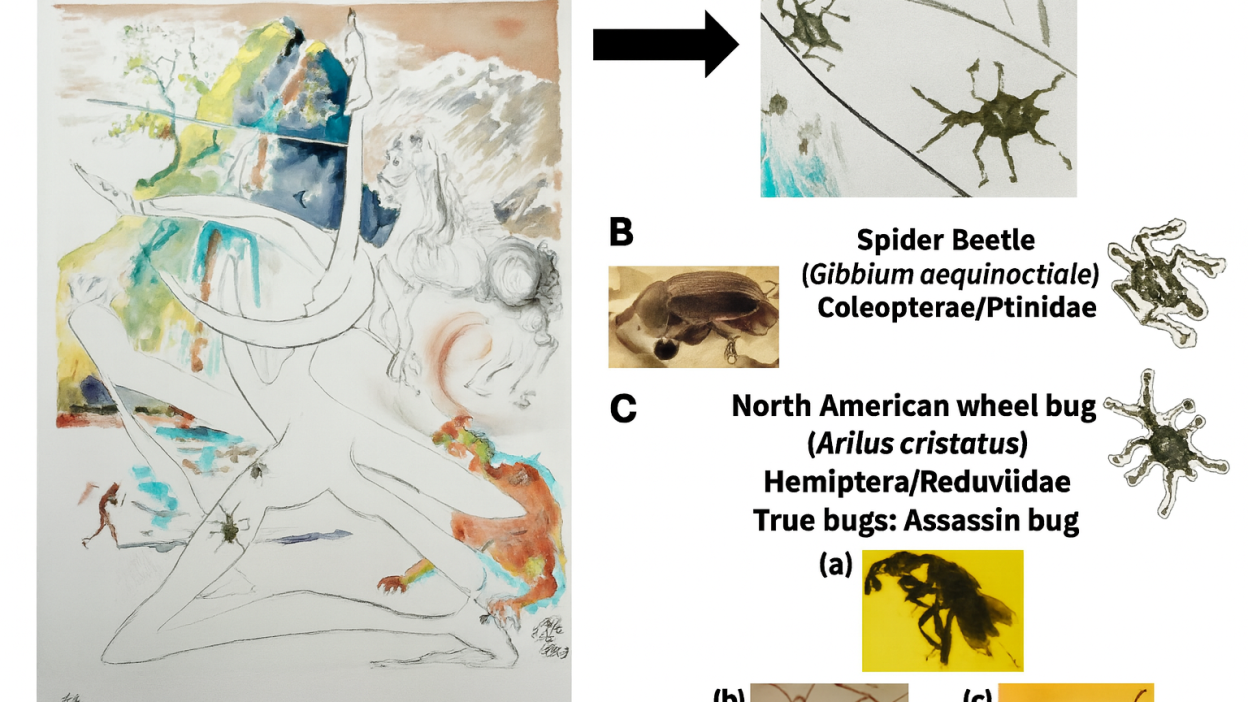
This study explores an unusual but fascinating intersection—how surrealist art, particularly by Salvador Dalí and Cuban artists Roberto Alvarez Ríos, Jorge Camacho, and Agustín Cárdenas, can inspire paleontological research. By comparing surrealistic depictions of insects and skeletal forms with fossil evidence, the research reveals striking parallels that open new possibilities for art–science collaboration.
Background
Art and science have long influenced each other, but the integration of surrealism into paleontology remains rare. Surrealism, a movement born in post–World War I Europe, thrives on the subconscious and symbolic imagery. Meanwhile, paleontology reconstructs ancient life from fossil remains, often relying on visual representation. Cuban surrealism, enriched with indigenous and Afro-Caribbean themes, offers a culturally distinct visual language that has never been systematically studied in connection with fossil research.
Aim
The study set out to answer one central question:
How do intercultural surrealistic artistic representations inspire and inform paleontological inquiry, particularly in the morphological study of fossil arthropods and skeletal remains?
Method
Using qualitative visual analysis, the researcher examined selected surrealist artworks for recurring biological motifs—especially insects, spiders, and bones. These motifs were then compared with real fossil inclusions found in amber and mineralized skeletal remains. Both European surrealism (Dalí) and Cuban surrealism (Ríos, Camacho, Cárdenas) were included, ensuring a broad intercultural scope.
Findings
- Dalí’s The Earth Goddess (The Chef) depicts an ant closely resembling Linepithema species preserved in Cretaceous Burmese amber (~99 million years old).
- His Sirenas peinadas con coral y hormigas features a weaver ant (Oecophylla), known from Eocene Baltic amber.
- Other works contained insect forms matching beetles, assassin bugs, spiders, and mites with fossil records in amber from the Miocene, Eocene, and Cretaceous periods.
- Cuban surrealist art incorporated bone motifs and hybrid life forms that visually echoed vertebrate fossils like Keichousaurus and Prognathodon.
Conclusion
Surrealist artworks, while symbolic and not anatomically precise, often parallel scientifically documented fossils. These parallels suggest that art can spark scientific curiosity, offering fresh perspectives for interpreting evolutionary history. The research confirms the value of art–science collaborations in enriching both disciplines.
Implications
- For scientists: Surrealist art can be a creative catalyst for developing new research questions and interpretive frameworks in paleontology.
- For artists: Scientific imagery and fossil records offer rich inspiration for symbolic and cultural storytelling.
- For science communication: Integrating intercultural artistic perspectives makes paleontology more relatable and accessible to diverse audiences.
https://doi.org/10.36923/jicc.v25i3.1181
Authors
Center for Veterinary Health Sciences (CVHS), Department of Veterinary Pathobiology, Oklahoma State University (OSU), USA.


